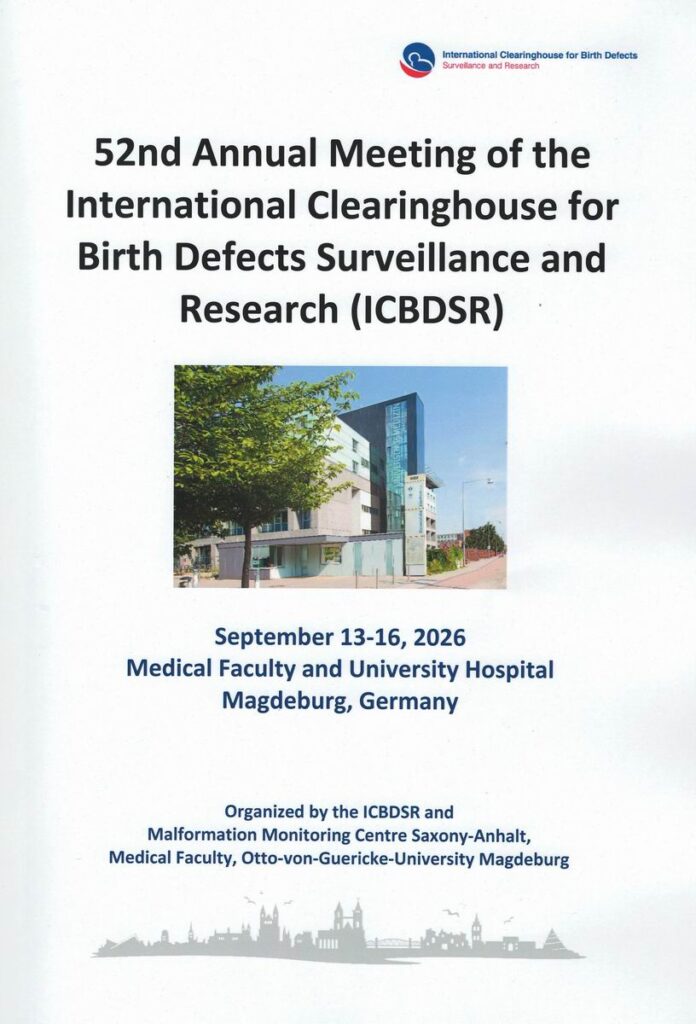
The 52nd Annual Meeting of the International Clearinghouse for Birth Defects Surveillance and Research – ICBDSR) was held in Magdeburg, Germany, during September 13-16, 2026. The organization brings together birth defect surveillance and research programs from around the world to study and prevent birth defects and reduce the impact of their consequences.
The meeting was organized by the ICBDSR and the Saxony-Anhalt Malformation Monitoring Centre of the Medical Faculty of Otto-von-Guericke University, Magdeburg.
The OMNI-Net team was represented by Diana Akhmedzhanova, information specialist at the Khmelnytskyi OMNI-Center. During the meeting, she presented a report “Chernobyl and Developmental Anomalies (2000-2019)”, dedicated to the results of the OMNI-Net’s 20-year research in the Rivne province of Ukraine. The study expanded and once again confirmed the association of the impact of Chornobyl radiation on pregnant women and congenital malformations in children.
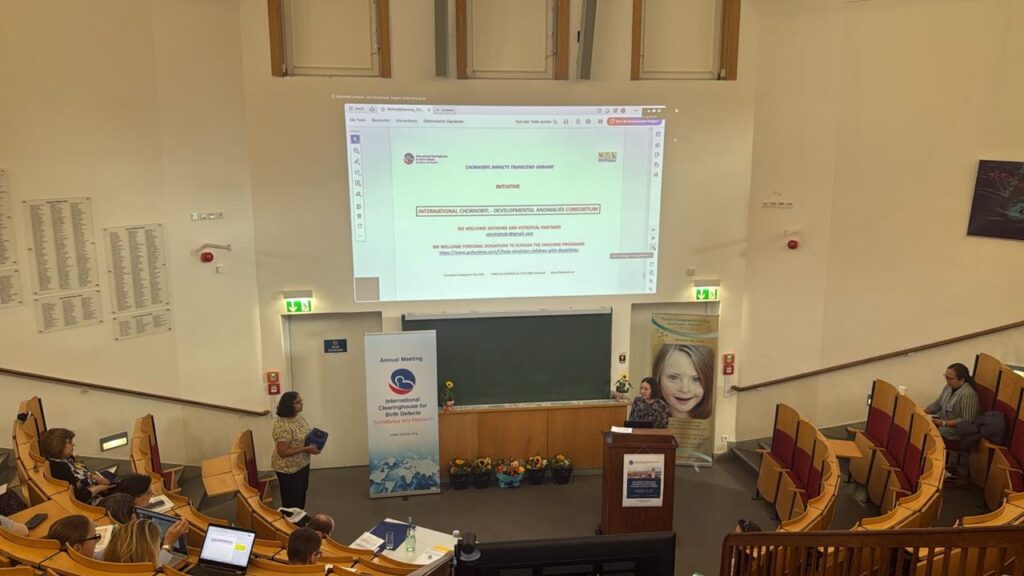
Ms. Diana Akhmedzhanova is speaking
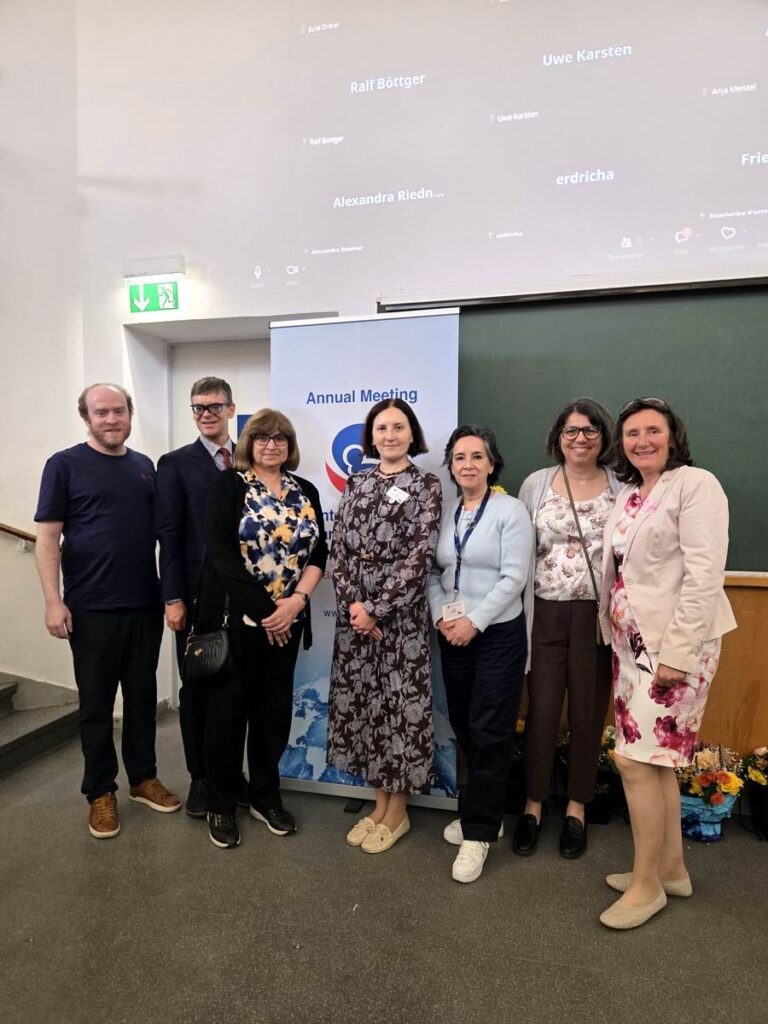
From left to right: Dr. Boris Groisman (Medical Geneticist and Epidemiologist, Miembro de la Coordinación RENAC at Administración Nacional de Laboratorios e Institutos de Salud, Argentina), Dr. Antonín, Šípek (Clinical geneticists, Assistant professor, General University Hospital, Charles University in Prague, 1st Faculty of Medicine, Czech Republic), Dr. Miriam Gatt (Malta Congenital Anomalies Register (MCAR), Ms. Diana Akhmedzhanova (Information Specialist, OMNI-Net Ukraine Birth Defects Program, Ukraine), Dr. Cecilia Mellado Sagredo (Vice Chair, ICBDSR Executive Committee 2025-2027, Medical Geneticist, Professor (Associate), Head, Section of Genetics and Inborn Errors of Metabolism; Director, Residency Program in Medical Genetics, Pontifical Catholic University of Chile, Chile), Dr. Mary Ann Thomas (Chair, ICBDSR 2025-2027 Executive Committee; Associate Professor, Cumming School of Medicine, Departments of Medical Genetics, and Pediatrics, Child Health & Wellness Researcher, Alberta Children’s Hospital Research Institute, Canada), Dr. Anke Rissmann (Coordinator of a network of experts, Manager of registry, Malformation Monitoring Centre Saxony‐Anhalt, Medical Faculty Otto‐von‐Guericke‐University Magdeburg Magdeburg, Germany)
Our conclusions are unambiguous: intrauterine exposure to Chornobyl radionuclides has a teratogenic effect: disruption of embryonic and fetal development under the influence of external factors (teratogens), which leads to the occurrence of morphological anomalies and congenital malformations in the fetus.
However, these consequences — including increased rates of neural tube defects and microcephaly — can be avoided.
We know that prenatal radiation exposure can be prevented.
The current monitoring of the health status of the studied cohort is carried out until the age of one year – it is necessary to investigate health disorders that occur beyond the age of one year of life.
The population cohort we are studying is unique, and the impact of Chornobyl goes beyond Ukraine.
The OMNI-Net has the capacity to implement this next phase, and we invite our Ukrainian and international colleagues to join in creating the International Consortium to study Chornobyl-related developmental disabilities.
Please contact us at omninetukr@gmail.com
WE INVITE YOU TO PARTICIPATE!
Please, read the full text of the abstract submitted by OMNI-Net to the 52nd ICBDSR meeting.